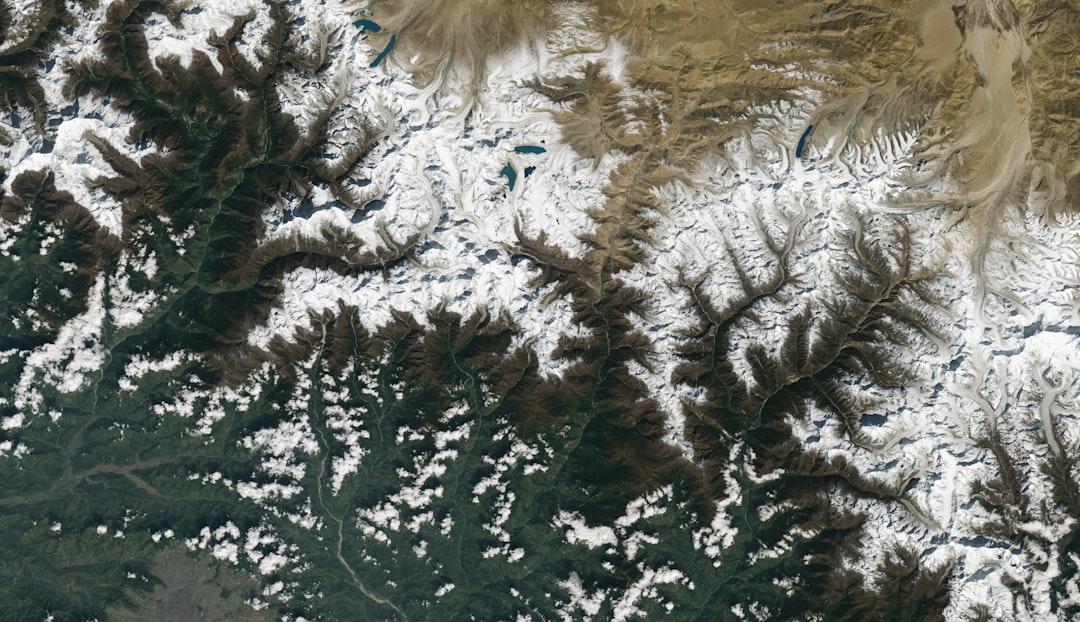
On August 26 a glacier collapsed in the Langtang region of Nepal near the China border, triggering an ice and rock avalanche. This apparently entered the Lhende Khola, a tributary of the Bhote Koshi river, where it either caused or contributed to a temporary blockage. When this burst, a catastrophic flash flood travelled almost 100 kilometres downstream.
A glacier collapses
There’s nothing to stop the avalanche down the Trishuli river valley
Did warm conditions play a role?
There is increasing interest in the role of unusually warm conditions and glacial permafrost instability. Warming can increase meltwater penetration into the crevasses of glaciers and weaken ice-rock bonds. British Antarctic Survey researchers reported unusually high ground temperatures two days before the collapse.
Satellite images stitched from Copernicus Sentinel-2 data
Video sources: Gyirong Port – AP News_; Boulder – ABC News; Fast moving water – @pujanpokhareofficial/Instagram
You can support the Nepal Flood Disaster Appeal through the Emergency Action Alliance website or by calling 1300 939 000.
Levan Tielidze has received funding from the Australian Research Council.
Digital Storytelling Team does not work for, consult, own shares in or receive funding from any company or organisation that would benefit from this article, and has disclosed no relevant affiliations beyond their academic appointment.
Written by Levan Tielidze, Research Fellow in Glacial Geomorphology, Monash University. This article is republished in full from The Conversation under CC BY-ND 4.0. Read the original article. Photographs from the original are not included, as the licence covers the text only.
Comments
No comments yet — be the first to share your view.
Sign in or create an account to join the discussion.